Large Language Models, often referred to as LLMs, are at the core of modern artificial intelligence systems like chatbots, coding assistants, and content generators.
They are designed to understand, generate, and manipulate human language in a way that feels natural.
While the outputs may seem almost human, the underlying systems are built on well-defined mathematical and computational principles.
This article explains how large language models work, the key technologies that power them, and includes simple examples to make the concepts easier to understand.
What Is a Large Language Model?
A large language model is a type of machine learning model trained on massive amounts of text data. Its goal is to predict the next word in a sequence based on the words that came before it.

At its core, an LLM does not “think” or “understand” in the human sense. Instead, it identifies patterns in language and uses probability to generate responses.
For example, given the sentence:
“The cat sat on the…”
The model calculates probabilities for possible next words such as “mat”, “floor”, or “chair” and selects the most likely option based on its training.
The Foundation: Neural Networks
Large language models are built using artificial neural networks. These are mathematical systems inspired by the structure of the human brain. They consist of layers of interconnected nodes that process information.
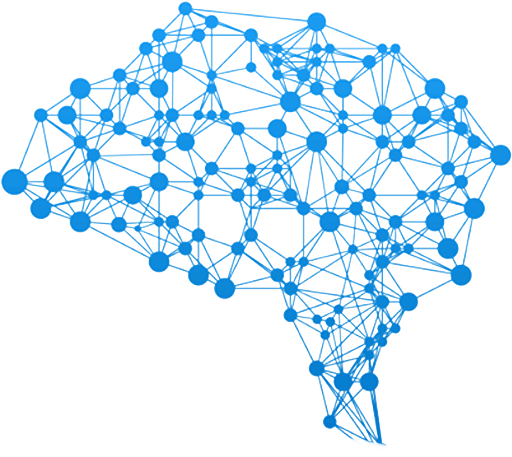
Each layer transforms the input data slightly, allowing the model to gradually extract meaning. Early layers might focus on simple patterns such as word shapes, while deeper layers capture grammar, context, and relationships between words.
The Breakthrough: Transformers
The most important advancement behind modern LLMs is the transformer architecture. Introduced in the paper “Attention Is All You Need,” transformers changed how models process language.
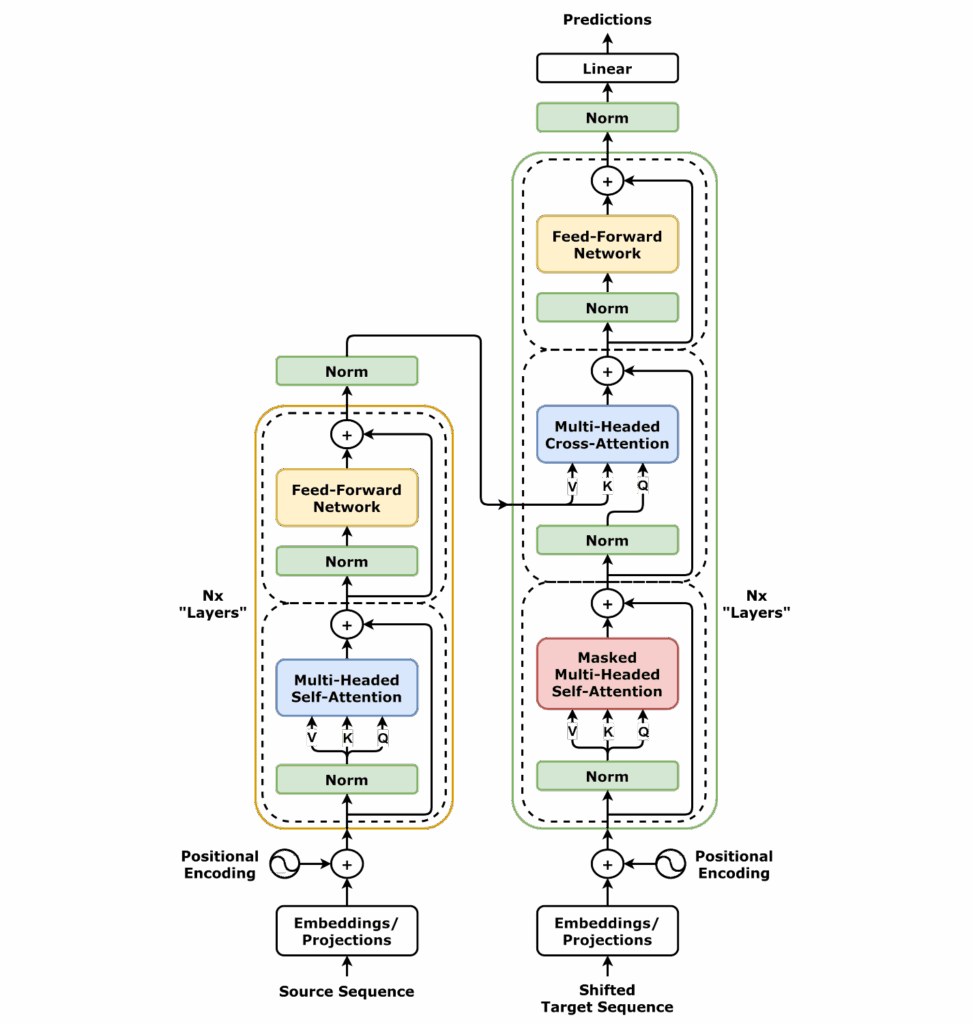
Unlike older models that read text sequentially, transformers process entire sentences at once. This allows them to understand context much more effectively.
Self-Attention Mechanism
The key innovation in transformers is called self-attention. This mechanism allows the model to weigh the importance of each word in a sentence relative to others.
For example, consider the sentence:
“The bank near the river was flooded.”
The word “bank” could mean a financial institution or the side of a river. Self-attention helps the model connect “bank” with “river” and choose the correct meaning.
Tokenization: Breaking Text into Pieces
Before a model can process text, it needs to convert it into a numerical format. This process is called tokenization.
Instead of treating words as whole units, LLMs often break text into smaller components called tokens. These can be whole words, subwords, or even individual characters.
For example:
“unbelievable” → [“un”, “believ”, “able”]
Each token is then converted into a number, which the model can process mathematically.
Embeddings: Turning Words into Vectors
Once text is tokenized, each token is transformed into a vector, which is essentially a list of numbers. This process is called creating embeddings.
Embeddings capture semantic meaning. Words with similar meanings will have similar vector representations. For example, “king” and “queen” will be closer in vector space than “king” and “banana”.
This allows the model to understand relationships between words beyond simple definitions. You can also create vector databases.
Training the Model
Training a large language model involves feeding it vast amounts of text data and adjusting its internal parameters to improve predictions.
The primary training objective is simple:
Predict the next token in a sequence.
For example:
Input:
“The sun rises in the”
Target:
“east”
The model makes a prediction, compares it to the correct answer, calculates an error, and adjusts its internal weights using a process called backpropagation.
This process is repeated billions or even trillions of times.
Fine-Tuning and Alignment
After initial training, models often undergo fine-tuning. This step adapts the model for specific tasks such as answering questions, writing code, or assisting users in conversation.
A common technique used here is reinforcement learning from human feedback. Human reviewers evaluate model outputs and guide it toward more helpful and safe responses.
Inference: How Models Generate Responses
Once trained, the model enters the inference phase. This is when it generates text in response to user input.
The process works step by step:
- The input text is tokenized
- The model predicts the next token
- That token is added to the sequence
- The process repeats until a complete response is formed
For example, if you ask:
“Explain photosynthesis simply”
The model generates one word at a time, each based on the context built so far.
Key Technologies Behind LLMs
Several technologies work together to make large language models effective and scalable.
1. High-Performance Computing
Training LLMs requires massive computational power. Graphics Processing Units and specialized AI chips allow models to process large datasets efficiently.
2. Distributed Training
Because of their size, models are trained across multiple machines simultaneously. This allows for parallel processing and significantly reduces training time.
3. Optimization Algorithms
Techniques such as gradient descent and adaptive optimizers help models learn efficiently by adjusting parameters in the right direction.
4. Scaling Laws
Research has shown that increasing model size, dataset size, and compute power leads to better performance. This is why modern LLMs are so large.
5. Context Windows
LLMs have a limited memory of recent tokens, known as the context window. Advances in this area allow models to handle longer conversations and documents.
A Simple Example
Imagine you are building a basic language model with a small dataset:
Training data:
- “I like coffee”
- “I like tea”
If you input:
“I like”
The model will assign probabilities:
- coffee: 0.5
- tea: 0.5
As the dataset grows, the model becomes better at predicting more complex patterns. Context will also come into play here.
Limitations of Large Language Models
While powerful, LLMs have limitations. They can generate incorrect information, reflect biases in training data, and struggle with reasoning beyond learned patterns.
They also do not have real-world understanding or awareness. Everything they produce is based on statistical relationships in data.
The Future of LLMs
Large language models are evolving rapidly. Improvements in efficiency, reasoning, multimodal capabilities, and real-time learning are shaping the next generation of AI systems.
As these models become more integrated into software, business processes, and everyday tools, understanding how they work becomes increasingly important.
How Vox Machina Helps
At Vox Machina, we specialize in implementing AI automation solutions tailored to your industry. We design systems that combine 20 years of software development, marketing, security, cloud and now AI to streamline your operations. Look at our process.
Want to explore how AI can transform your business?
Contact Vox Machina, your partner in Generative, Analytical, Reasoning, and Agentic AI solutions.