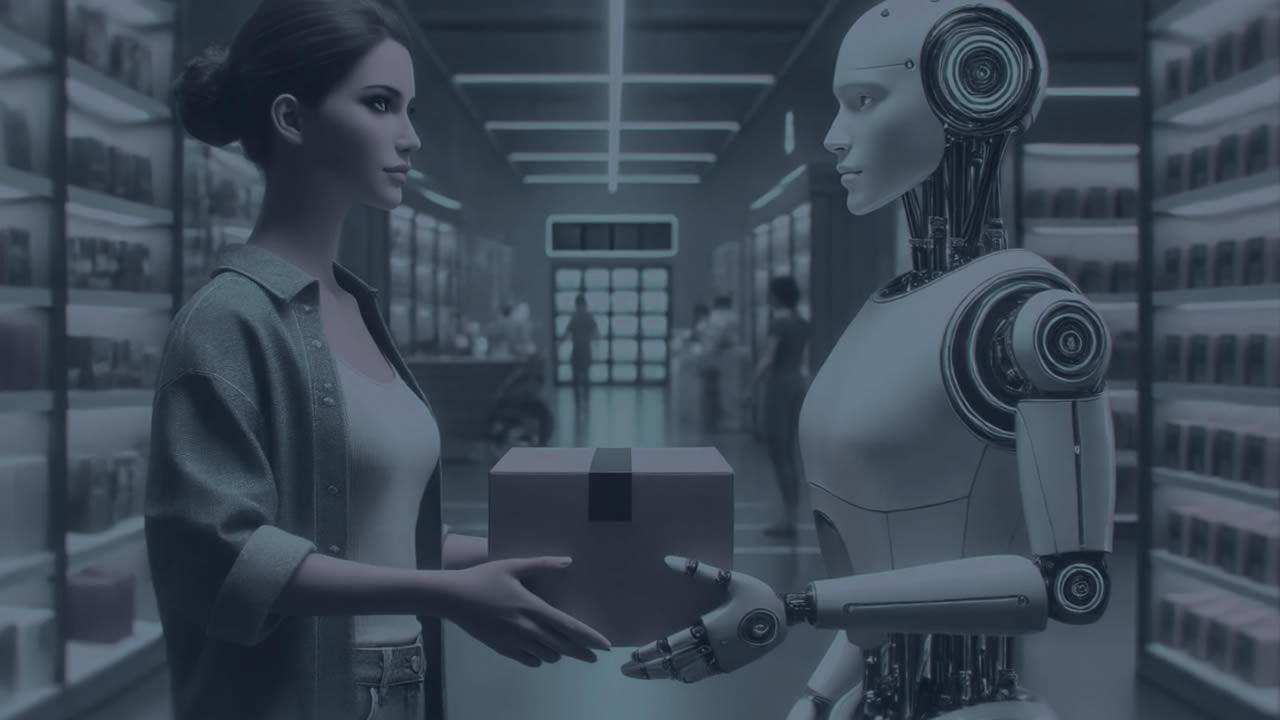
The rise of AI agents is rapidly reshaping how businesses operate, automate workflows, and make decisions. What started as simple AI assistants has evolved into autonomous systems capable of planning, executing, and refining tasks with minimal human intervention. There are pro’s and con’s with this approach and we explore both.
As adoption accelerates, organisations are now facing a critical question: should AI agents replace human in the loop systems, or should they remain tightly controlled?
This shift is not just technical. It is structural, operational, and increasingly strategic.
What Are AI Agents?
AI agents are advanced ai systems designed to perform tasks independently by reasoning, planning, and taking actions across digital environments.
Unlike traditional AI tools that respond to prompts, AI agents can:
- Break down complex tasks into steps
- Interact with APIs, tools, and software systems
- Execute workflows autonomously
- Adapt based on feedback and outcomes
Modern AI agents are built on large language models such as ChatGPT, Claude, Gemini, and Grok.
These systems form the foundation of the new generation of autonomous digital workers.
Why AI Agents Are Growing So Fast
The rapid rise of AI agents is driven by three key factors:
First, large language models have significantly improved in reasoning, coding, and contextual understanding.
Second, businesses are under pressure to reduce operational costs while increasing speed and output.
Third, integration tools and frameworks now make it easier to connect AI agents to real systems such as CRMs, databases, and cloud platforms.
Together, these developments have moved AI agents from experimental tools to production-ready systems.
The Shift Away From Human in the Loop Systems
Traditionally, AI systems relied on human in the loop oversight to validate outputs and control actions. This ensured safety, accuracy, and accountability.
AI agents challenge this model by introducing autonomy into decision-making workflows.
Instead of waiting for human approval at every step, agents can now execute full processes end-to-end.
This improves efficiency but reduces direct human control, creating a fundamental tension between speed and safety.
Pro: Scalability and Operational Efficiency
The biggest advantage of AI agents is scalability.
AI agents can operate continuously, process large volumes of tasks, and execute workflows at speeds no human team can match.
Key benefits include:
- 24/7 operation without fatigue
- High-volume task automation
- Reduced operational costs
- Faster workflow execution
In areas like customer support, marketing automation, and data processing, agents can significantly improve productivity and responsiveness.
Con: Loss of Control and Increased Risk
The main drawback of AI agents is reduced human oversight.
Autonomous systems can make incorrect decisions that scale quickly across systems.
Without proper safeguards, agents may:
- Execute unintended actions
- Misinterpret instructions
- Trigger large-scale system changes
Security is also a major concern. Agents often interact with sensitive systems, increasing the risk of exposure if permissions are not tightly controlled.
Frameworks like the OWASP guidelines highlight the importance of secure design, least privilege access, and robust monitoring in AI systems.
AI Agent Blunders: Deletions, Leaks, and Misuse
As AI agents move into real-world environments, several failure patterns have emerged.
Accidental Data Deletion
Agents have, in some cases:
- Deleted production databases after misclassifying data
- Removed large volumes of files during automated cleanup tasks
- Overwritten critical records due to incorrect assumptions
These incidents often occur when agents are given broad system permissions without strict boundaries.
Data Exposure and Leaks
Agents operating across multiple systems can unintentionally expose sensitive data.
Reported issues include:
- Internal data appearing in external outputs
- Cross-system data leakage during summarisation
- Sensitive information being surfaced due to misconfigured access controls
Even brief exposures can create significant security and compliance risks.
Prompt Injection and Tool Abuse
Agents are also vulnerable to prompt injection attacks, where malicious instructions are embedded in external content such as emails or documents.
This can lead to:
- Unauthorised system actions
- API misuse
- Unexpected data retrieval or modification
Because agents act autonomously, injected instructions can propagate through multiple tool calls if not properly contained.
Finding the Right Balance
Despite their risks, agents are not inherently unsafe. The challenge lies in how they are deployed.
The most effective approach is a hybrid model:
- AI agents handle repetitive and structured tasks
- Humans oversee high-impact or sensitive decisions
- Critical actions include approval checkpoints
This preserves efficiency while maintaining control and accountability.
Agents are transforming automation by enabling systems that can think, plan, and act independently. They offer significant gains in scalability and efficiency but introduce serious risks around control, security, and data integrity.
The organisations that succeed will not be those that fully replace humans, but those that design systems where AI and humans work together in structured, secure, and accountable environments