In May 2017, the world experienced one of the most disruptive cyberattacks in history: the WannaCry ransomware attack. Within hours, computers across more than 150 countries were locked, hospitals were forced to cancel surgeries, factories shut down production lines, and businesses were left scrambling to recover their data.
Unlike traditional ransomware campaigns that rely on phishing emails or user interaction, WannaCry spread automatically, exploiting a vulnerability deep within Microsoft Windows networking services.
What made WannaCry especially alarming was not just the scale of the attack, but how easily it spread. The attack exposed serious weaknesses in global cybersecurity practices and highlighted the dangers of outdated systems and ignored software updates.
The attack originated from a leaked cyber-espionage tool known as EternalBlue, which was allegedly developed by the U.S. National Security Agency (NSA). In April 2017, this tool was publicly released by a hacker group called the Shadow Brokers, placing a powerful exploit into the hands of cybercriminals worldwide.
Once deployed, WannaCry spread rapidly across corporate networks, hospitals, factories, and government systems, particularly targeting machines running unpatched or unsupported versions of Windows. Its worm-like behaviour allowed it to move laterally across networks without user involvement, making containment extremely difficult in the early hours of the outbreak.
What Was WannaCry?
WannaCry was a ransomware worm. Ransomware is malicious software that encrypts a victim’s files and demands payment (usually in Bitcoin) to restore access. A worm, on the other hand, can spread automatically across networks without any user interaction.
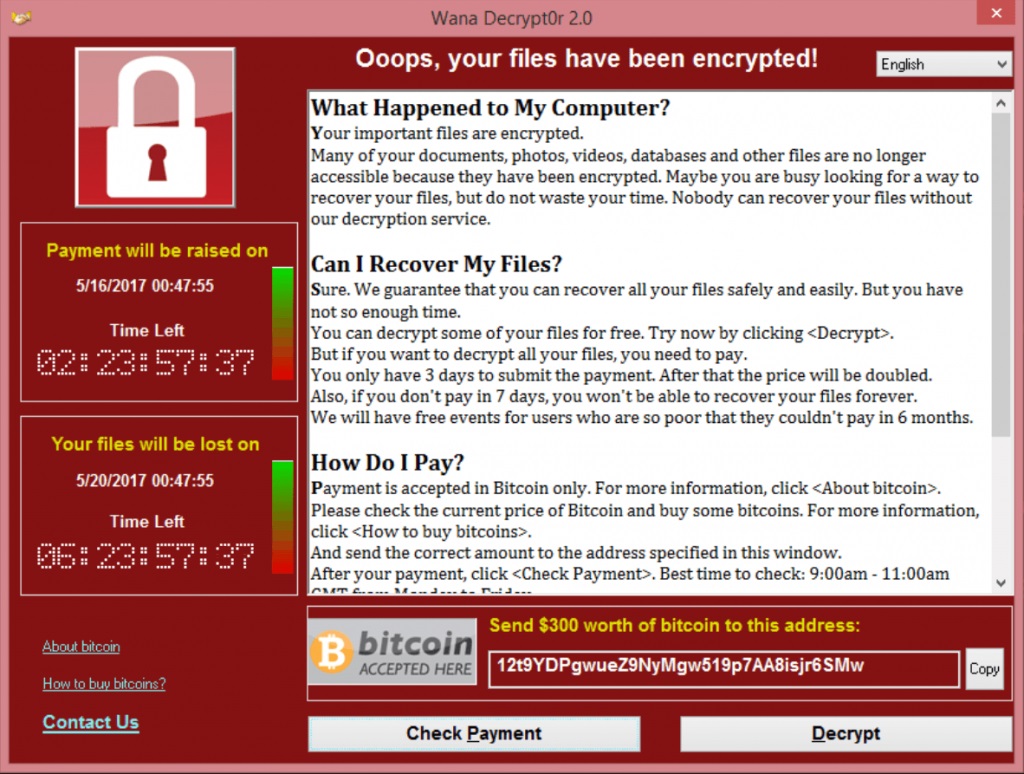
Once infected, victims saw a red warning screen demanding payment, typically $300 in Bitcoin, doubling if not paid within a few days. It also came along with a countdown timer threatening permanent data loss.
How the Hackers Pulled It Off
Exploiting a Windows Vulnerability
The attackers behind WannaCry took advantage of a critical vulnerability in Microsoft Windows known as EternalBlue. This flaw existed in the Windows SMB (Server Message Block) protocol, which is used for file and printer sharing across networks.
EternalBlue was not discovered by hackers initially—it was allegedly developed by the NSA and later leaked online by a hacker group called the Shadow Brokers.
Although Microsoft had released a security patch for this vulnerability months before the attack, many organisations had not installed the update, leaving millions of systems exposed.
No User Click Required
Unlike many attacks that rely on phishing emails or malicious downloads, WannaCry didn’t need victims to click anything.
Once it infected one unpatched computer, it:
- Scanned the local network and the internet for other vulnerable machines
- Automatically spread itself to those systems
- Repeated the process again and again
This self-propagating behavior allowed WannaCry to spread at an unprecedented speed.
Targeting Outdated Systems
Many of the worst-hit organisations were running outdated or unsupported versions of Windows, such as Windows XP. Hospitals, manufacturing plants, and government institutions were particularly vulnerable because of legacy systems that were difficult to update or replace.
The Real-World Impact
The effects of WannaCry were immediate and severe:
- UK National Health Service (NHS) hospitals had to turn away patients and cancel appointments
- Factories around the world halted production
- Telecom companies, banks, and logistics firms experienced major disruptions
The estimated global cost of the attack ran into billions of dollars, far exceeding the actual ransom collected by the attackers.
How WannaCry Was Eventually Stopped
The Accidental Kill Switch
In a surprising twist, WannaCry was slowed down dramatically by a cybersecurity researcher known online as MalwareTech.
While analysing the malware, he discovered that WannaCry tried to contact a specific, unregistered web domain before encrypting files. If the domain responded, the malware would stop running.
MalwareTech quickly registered the domain, unintentionally activating a built-in kill switch that prevented further spread of the ransomware across many networks.
Emergency Patches from Microsoft
In response to the crisis, Microsoft took the unusual step of releasing emergency security patches even for unsupported systems like Windows XP and Windows Server 2003.
These patches helped organisations secure vulnerable machines and stop further infections.
Increased Global Awareness
The attack forced governments and businesses worldwide to:
- Prioritise software updates and patch management
- Invest more heavily in cybersecurity
- Re-evaluate reliance on outdated legacy systems
Lessons Learned from WannaCry
The WannaCry attack taught the world several crucial lessons:
- Unpatched systems are dangerous : Even a single outdated computer can compromise an entire network
- Cyber weapons don’t stay secret forever : Once leaked, they can be weaponised by criminals
- Basic cybersecurity hygiene matters : Regular updates, backups, and network segmentation can prevent massive damage
WannaCry was more than just a ransomware attack, it was a global warning. It showed how quickly a single vulnerability could cripple critical infrastructure and disrupt everyday life.
While the attack was eventually contained, its legacy remains a powerful reminder: in an increasingly connected world, cybersecurity is not optional. Staying updated, prepared, and informed is the best defence against the next WannaCry-level threat.


[…] of these tools, EternalBlue. Later used by North Korean and Russian state actors to launch the WannaCry and NotPetya ransomware attacks, causing billions of dollars in global […]