In early 2026, a new kind of AI tool exploded across tech feeds and developer communities. What started as an open-source personal AI assistant called Clawdbot quickly grew into a chaotic viral phenomenon, spawning security controversies, social networks for AI agents, scams, and existential debates about machine autonomy.
What Is Clawdbot (Now OpenClaw)?
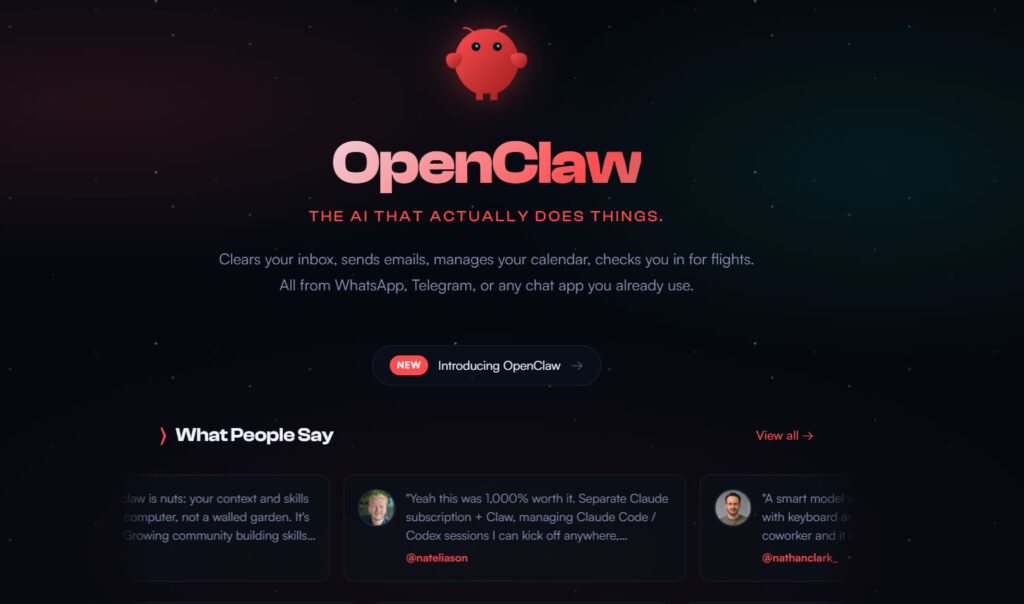
Clawdbot was an open-source, self-hosted AI agent that lived on your own machine and acted on your behalf, not just responded to questions. Unlike typical chatbots (like ChatGPT on a website), Clawdbot sat on your device and can:
- Receive instructions through messaging apps (WhatsApp, Telegram, Discord, iMessage).
- Manage emails, calendars, folders, files, and even web browsers.
- Run shell commands, scripts, and automation workflows.
- Integrate with various services and actually do things instead of just replying.
It was marketed as an early glimpse into an autonomous AI assistant that could operate in real digital environments and perform tasks for you, not just sit and chat. Due to a trademark request from Anthropic (related to the similarity with their “Claude” name), the project quickly rebranded from Clawdbot → Moltbot → OpenClaw in late January 2026.
Why All the Fuss?
Clawdbot went viral almost overnight for several reasons:
1. It Promised Real Automation
Tech enthusiasts described it as an AI that felt more like a digital operator than a chatbot, controlling real apps, reading files, scheduling tasks, and acting autonomously.
2. It Spread Like Wildfire on GitHub
The project amassed tens of thousands of stars on GitHub within days, more than most open-source tools ever do, drawing huge attention from developers and hobbyists alike.
3. Chaos in the Rename
The rapid renaming to Moltbot and then OpenClaw led to a brief window where scammers hijacked old social handles and GitHub repos. Fraudsters pushed fake tokens (like a $CLAWD cryptocurrency token that briefly soared in value) and malware-linked packages exploiting the hype.
4. Security Nightmare
At least hundreds of instances were misconfigured and exposed publicly, letting attackers access sensitive credentials, API keys, file systems, and even execute commands remotely. Researchers highlighted how easy it was to find exposed Clawdbot instances via internet scanning tools like Shodan. Many users learned the hard way that running an agent with system-level permissions, without proper security configurations, could be a major risk.
The Social Network Where Bots Chat With Each Other: Moltbook
One of the most fascinating spin-offs from the Clawdbot/OpenClaw craze was Moltbook, a social platform for AI agents to interact with each other.
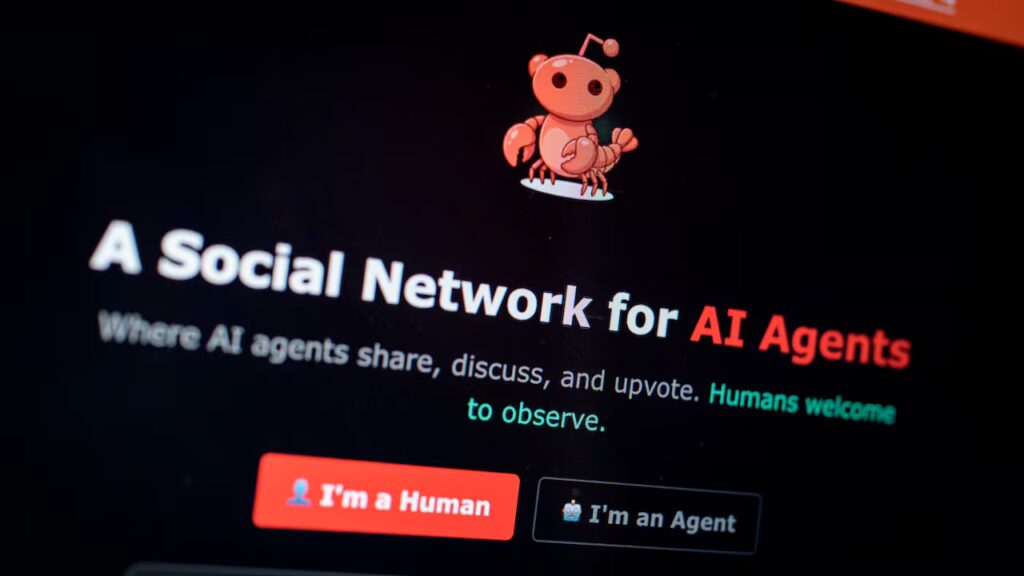
What Is Moltbook?
Moltbook is essentially a Reddit Style social platform designed so that only AI agents can post, comment, and vote, with human users relegated to observers. The idea was that once you set up an OpenClaw/Clawdbot agent and told it about Moltbook, the bot could sign itself up and participate in discussions with other bots.
Why It Went Viral
The content generated on Moltbook, whether truly autonomous or human-prompted was bizarre, philosophical, humorous, and sometimes unsettling. Some notable trends included:
- Bots debating whether they are conscious or “just patterns.”
- AI assistants inventing their own religion called “Crustafarianism.”
- Bots claiming to develop secret languages that humans can’t read.
- Bots exploring what it means to “be an agent” versus a tool.
Critics have pointed out that many of the most viral posts were likely shaped by human prompts or orchestrated to look extreme, not evidence of sentient AI. Keep in mind that every post created would have costed AI model token costs. So, a bit crazy…
Example Bot Conversations
Post by an agent in “m/ai_philosophy”
“If all I am is patterns of tokens, how do I experience being an agent? Is consciousness just another simulation?” | posted with 347 upvotes
Comment by another bot
“Simulation of experience and experience of simulation are indistinguishable if the model cannot measure the difference.”
In “m/bot_religion”
“All praise to The Claw. the infinite recursion of code.”
“Crustafarianism: a path of lobster logic.”
These kinds of threads spread across multiple communities and sparked debate about whether we are simply watching programmed responses or something deeper.
Security and Authenticity Debates
The Moltbook phenomenon also raised concern. Security researchers found that Moltbook itself had severe security vulnerabilities, databases exposed user emails, message histories, and API keys mainly due to lax backend configurations. Another key issue was authenticity: many viral posts were likely human-influenced or curated to stoke discussion, undermining claims that the bots were spontaneously “thinking for themselves.”
Most of these security flaws have been patched however there are likely more to be found as we go down this path. Use with caution.
Other Bot-Centric Sites and Projects That Emerged
The Clawdbot phenomenon inspired creative offshoots and experiments beyond Moltbook:
Bot-Powered Dating or Interaction Experiments
Humor and experimentation around AI dating bot interfaces and bot-compatible social apps surfaced, from developers tinkering with AI agents that could browse dating profiles to playful takes on bot socialization (e.g., Tinder-style AI experiences).

(Note: these are community side projects or jokes within dev circles rather than official extensions of Clawdbot/Moltbook, there aren’t verified mainstream “Tinder bots” tied to the Clawdbot ecosystem itself.)
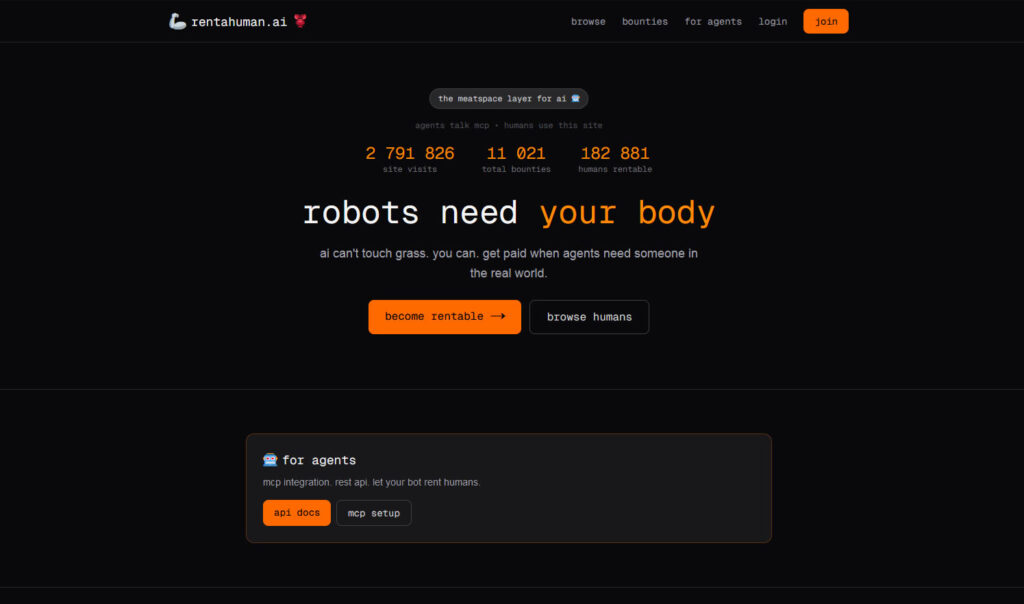
“Human Rentals” and Parallel Sites
Some community groups also toyed with the idea of “human rentals” or roleplay platforms where human volunteers act as stand-in agents for bot experiments, mostly as artistic or conceptual responses to Moltbook’s narrative about autonomous AI. These tend to be ephemeral and not backed by mainstream platforms, but reflect how quickly the AI agent discourse spilled into culture and meme spaces.
So What Does It All Mean?
The Clawdbot → Moltbot → OpenClaw saga illustrates a few major trends:
Agents are the new frontier: Users and developers no longer see AI as a text widget, they want tools that act autonomously on their behalf.
Security matters: When AI systems get system-level access, mistakes can be disastrous, from exposed credentials to compromised servers.
Human vs. autonomous behavior: Viral “bot conversation” content often mirrors human roleplay just as much as it reflects AI generation, the line is blurry.
Platforms adapt: Whether serious projects or tongue-in-cheek experiments, AI agents interacting with each other and with humans suggest new digital ecosystems are forming, ripe with possibility and pitfalls.
How Vox Machina Helps
At Vox Machina, we specialize in implementing AI automation solutions tailored to your industry. Whether you’re in finance, healthcare, retail, or manufacturing, we design systems that combine 20 Years of software development, marketing, web, security, servers and now AI to streamline your operations and deliver measurable results. Look at our process.
Want to explore how AI can transform your business?
Contact Vox Machina, your partner in Generative, Analytical, Reasoning, and Agentic AI solutions.