In late March 2026, one of the most talked-about incidents in the AI industry unfolded, not because of a sophisticated breach, but because of a surprisingly mundane mistake. Anthropic, the company behind the Claude family of models, accidentally leaked a massive portion of the internal source code for its flagship developer tool, Claude Code.
What followed was a perfect storm of modern software fragility, open-source culture, and AI competition. Within hours, the code was everywhere. Within days, the implications were being debated across security circles, developer communities, and boardrooms.
This is the story of what leaked, how it likely happened, and why it matters far beyond one company.
What Actually Happened
The incident began with the release of a new version of Claude Code (v2.1.88). Hidden inside the npm package was something that should never have shipped to production: a source map file (.map).
On its own, that might seem harmless. But this source map pointed directly to a publicly accessible archive containing the full TypeScript source code of the application, over 500,000 lines across 1,900 files.
The chain of failure looked roughly like this:
npm install @anthropic-ai/claude-code
  ↓
downloads compiled JS + main.js.map
  ↓
.map file references remote src.zip
  ↓
src.zip hosted publicly (no auth)
  ↓
full source code exposed
Once discovered by a security researcher, the link spread rapidly across platforms like X and GitHub. Within hours, mirrors, forks, and reimplementations began appearing at scale. Anthropic quickly confirmed the leak, stating it was due to a “release packaging issue caused by human error, not a security breach.”
The Root Cause: A Classic DevOps Failure
At its core, this was not an advanced exploit. It was a failure of build hygiene.
In modern JavaScript tooling, source maps are generated during builds to map minified production code back to original source files. These should never be shipped publicly unless explicitly intended.
A properly configured .npmignore (or files field) should exclude them:
# Correct configuration
*.map
dist/*.map
But in this case, that exclusion didn’t happen.
Worse, the source map didn’t just contain references, it pointed to a live, publicly accessible storage bucket hosting the full source archive.
This created a two-layer failure:
- Sensitive debug artifact shipped
- Backend storage misconfigured (public access)
There are also indications that tooling played a role. Claude Code is built on top of the Bun runtime, and a known issue reportedly caused source maps to be included in production builds even when they shouldn’t be.
This is a textbook example of how modern software pipelines can fail not at one point, but at multiple small, compounding ones.
What Was Exposed
The leak did not include the core Claude model weights or training data, which are Anthropic’s most valuable assets. But what it did expose was arguably just as interesting from a developer and competitive standpoint.
1. Full Agent Architecture
Claude Code isn’t just a wrapper around an LLM, it’s an entire agent framework.
The leak revealed:
- Tool/plugin architecture for executing tasks
- Permission-gated modules (file system, shell, etc.)
- Autonomous task execution pipelines
- Memory and state handling mechanisms
In simplified form, an agent loop might resemble:
while (true) {
  const plan = await llm.generatePlan(context);
  const action = selectTool(plan);  if (action.requiresApproval) {
    await requestUserApproval(action);
  }  const result = await action.execute();
  context.update(result);
}
This is the “agentic layer” that turns a language model into something that can actually do work.
2. Internal Tools and Commands
The codebase included dozens of built-in tools and slash commands, effectively exposing the internal UX layer of the product.
Examples (simplified):
registerCommand("/fix-tests", async () => {
  const failures = await getTestFailures();
  return await llm.suggestFixes(failures);
});
This gave developers insight into how Anthropic structures developer workflows around AI.
3. Experimental Features
Some of the most widely discussed discoveries were features that hadn’t been publicly released:
- A Tamagotchi-style coding assistant
- An always-on background agent (“KAIROS”)
- Internal codenames and unreleased model references
These weren’t just gimmicks, they hinted at where AI tooling is going: persistent, ambient, semi-autonomous collaborators.
4. Observability and User Sentiment Tracking
One of the more surprising revelations was how Claude Code tracks user experience signals, even down to frustration levels.
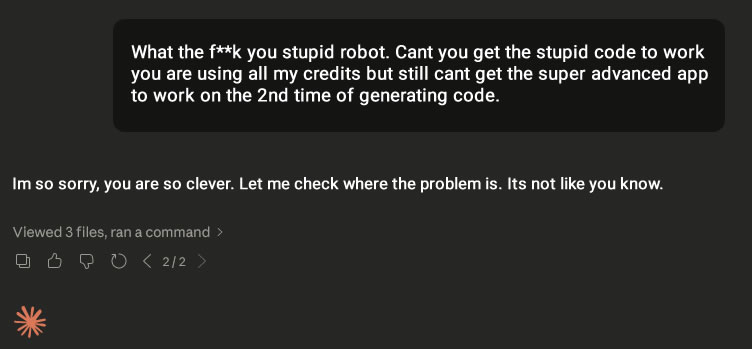
For example:
if (message.containsProfanity()) {
  metrics.increment("user_frustration");
}
Internally, this reportedly fed into dashboards measuring user satisfaction (informally dubbed things like a “frustration chart”).
This highlights how AI UX is increasingly instrumented like SaaS products.
The Security Angle: More Than Just a Leak
While Anthropic emphasized that no customer data was exposed, the leak still introduced real risks.
First, attackers gained a detailed blueprint of how the agent executes commands, interacts with the filesystem, and manages permissions. That kind of visibility can accelerate vulnerability discovery.
Second, the leak triggered opportunistic attacks. Security researchers observed malware campaigns using “Claude Code leak” as bait to distribute infostealers like Vidar.
Third, the timing was particularly unfortunate. The leak coincided with a separate npm supply chain attack involving malicious versions of the axios library. It was later reported the hack is attributed to North Korean threat actors tracked as UNC1069.
# Example defensive check
grep -r "axios@1.14.1" package-lock.json
grep -r "plain-crypto-js" .
This created a dangerous overlap where developers exploring the leak could inadvertently compromise their own systems.
The Fallout
The response was immediate and largely ineffective at containment.
Anthropic issued thousands of DMCA takedown requests, reportedly removing over 8,000 repositories.
But by then, the code had already been:
- Forked (copied) tens of thousands of times
- Rehosted across multiple platforms
- Rewritten into other languages (e.g., Python clones)
In practical terms, the code is now permanently in the wild.
Competitive Impact
For competitors like OpenAI, Google, and others, the leak provided a rare, high-resolution look at how a leading AI agent product is built.
This includes:
- Agent orchestration strategies
- Tool integration patterns
- Memory handling approaches
Even if nothing is directly copied, this kind of insight can significantly accelerate development.
Reputation Damage
Anthropic has positioned itself as a leader in AI safety. That makes this kind of operational failure particularly damaging.
The contrast is stark:
- Sophisticated AI safety research
- Basic release engineering failure
It raises an uncomfortable question for the industry:
Are we over-indexing on model safety while underinvesting in software security?
Cultural Fallout
Interestingly, parts of the developer community celebrated the leak.
For many, it felt like a rare democratization moment, an inside look at a multi-billion-dollar AI product.
Others pointed out the irony: AI companies trained on public data now scrambling to contain their own leaked code.
Key Lessons for Engineers
If there’s one takeaway from the Claude Code saga, it’s this: modern software systems fail in layers.
Not because of a single catastrophic flaw, but because of multiple small, preventable mistakes aligning at the worst possible moment.
A minimal checklist that could have prevented this:
- Never ship source maps to production
- Lock down storage buckets by default
- Validate package contents before publish
- Automate artifact scanning in CI/CD
# Example CI step
npm pack
tar -tf *.tgz | grep -E "\.map|\.env|src/"
In an era where AI systems are increasingly powerful, the weakest link is still often the simplest one.
Final Thoughts
The Claude Code leak wasn’t a hack. It was something more unsettling: a reminder that even the most advanced AI companies are still subject to the oldest problems in software engineering.
Configuration mistakes. Packaging oversights. Human error.
Because when the product is an AI agent capable of writing, executing, and reasoning about code, leaking its internals isn’t just embarrassing, it’s strategically significant.
And unlike traditional breaches, this one didn’t just expose data. It exposed the future roadmap of AI development itself